
Human factors for a lunar lander
A lander is judged on mass, propulsion and landing accuracy. What decides whether a surface mission works is a crew getting in and out of it, in a suit, twice a day, for weeks.
A vehicle you live inside
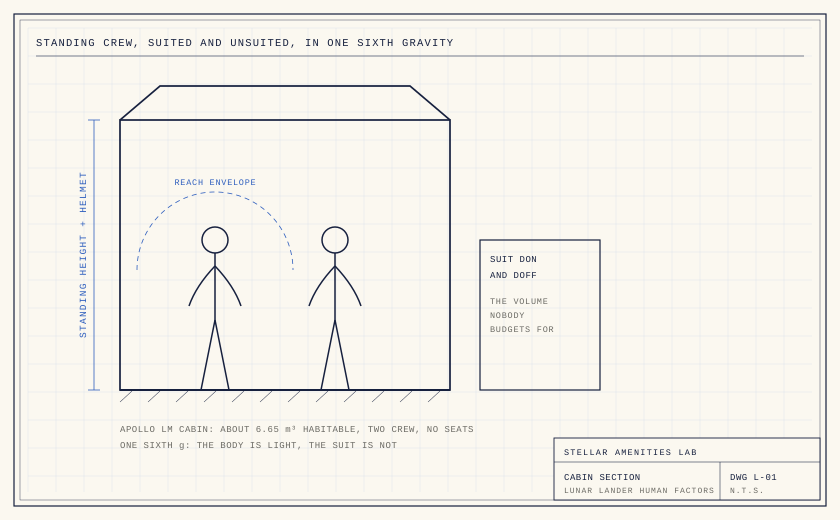
Apollo’s lunar module gave two crew roughly 6.65 cubic meters of habitable volume for stays measured in hours, with no seats. The landers now being built carry more people, for longer, and the human factors question changes with the duration: a cabin that is tolerable for a day becomes the limiting factor over a week.
In one sixth gravity the body is light but the suit is not. Mass still has inertia, so a suited crew member is hard to start and hard to stop in a small volume, and every handhold, corner and hatch edge is something to collide with.
The egress sequence is the mission
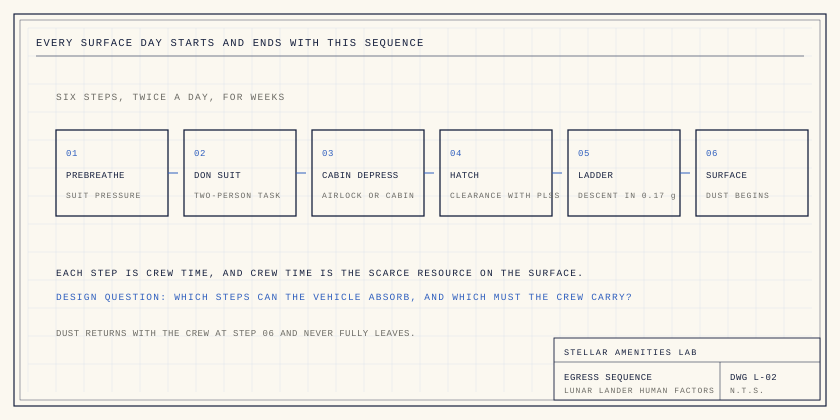
Each surface excursion runs the same sequence: prebreathe, don the suit, depressurize, clear the hatch with a backpack on, descend the ladder, and return covered in dust. Twice a day, for weeks. Every step is crew time, and crew time is the scarce resource on the surface.
The design question is which steps the vehicle can absorb and which the crew must carry. A suit port removes donning assistance and most of the depressurization. A wider hatch removes a collision risk. A dust mitigation strategy decides whether the cabin stays habitable in week three.
What we would measure
How it connects
This study sits between the training work and the habitation work. MEK is where a crew learns to move in a suit before they fly; the lander is where that movement meets a real volume on a real schedule; the surface habitat is where they go when the lander is no longer home.
Figures here come from public Apollo documentation and should be checked against current vehicle data before use in a proposal. If you are designing a lander, a suit or the operations between them, we would like to compare notes.