
There is nowhere on Earth to test for partial gravity
Twelve people have walked on the Moon, for a few days each. No one has lived in Martian gravity. Programs heading to a permanent lunar base will design habitats, exercise and medical care for conditions that have almost no human data behind them.
The test grounds that exist each hold one piece of the problem. A parabolic flight produces partial gravity for seconds at a time. A bed rest study removes load for weeks but keeps Earth gravity. A station gives months of weightlessness to a handful of people a year. None of them can be run at 0.17 g or 0.38 g for months, with enough people to see the range of how bodies respond.
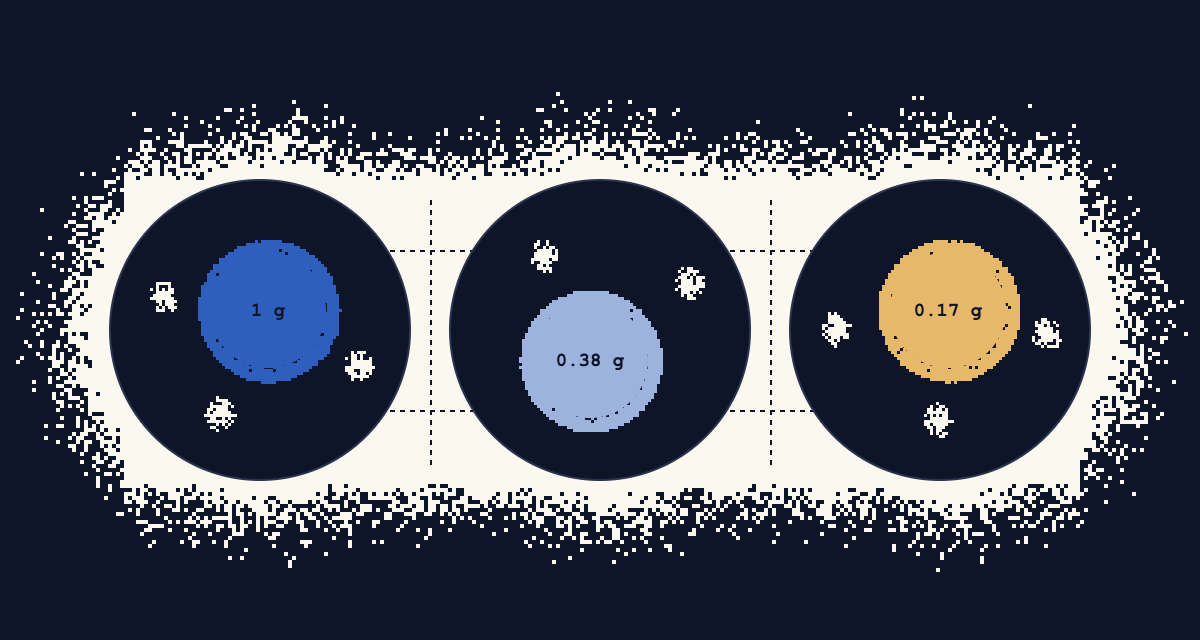
Two instruments that measure the body as it works
A simulation is only as good as what it learns from. We are building it on two streams of data that the Lab already works with, chosen because both can be collected repeatedly from the same person, on Earth and in flight.
Ultrasound shows what the body is. Training data shows what the body can do. Together they connect a change in tissue to a change in capability, which is the question a mission planner actually asks.
From one gravity to every gravity
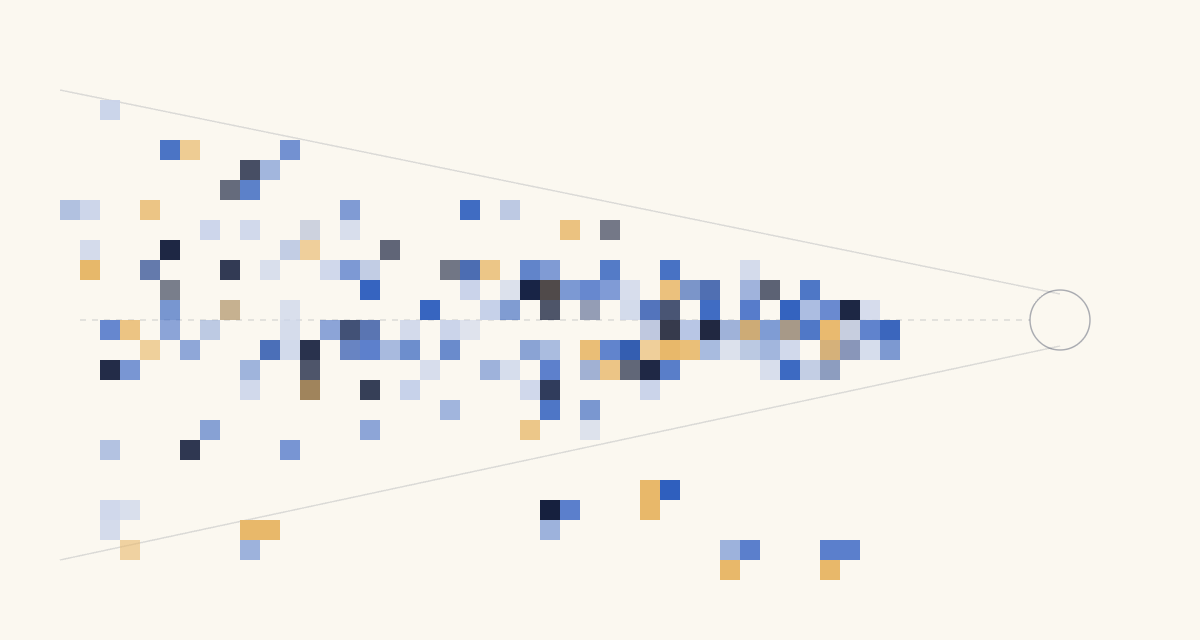
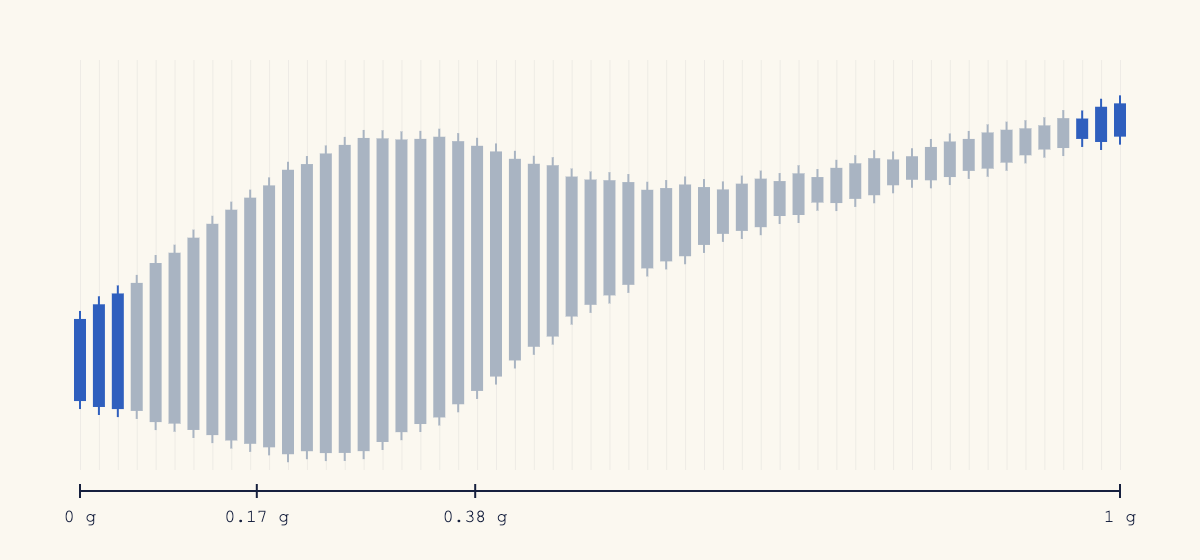
On Earth every measurement is taken at 1 g, but the load on a tissue still varies: rest, exercise, bed rest, training under added or reduced force. The model learns how bone, muscle and the heart respond across that range, then predicts what happens at loads Earth cannot produce for long.
Each prediction carries its uncertainty. Where the data is dense, close to 1 g and close to 0 g, the range is narrow. In between, at lunar and Martian gravity, it widens, and that is exactly where the next measurement is worth the most. The model tells us which flight, analog or training session to run next.
What can be tested before anyone flies
Bone is the clearest example. A bisphosphonate combined with exercise reduced bone loss in station crews (LeBlanc et al., Osteoporosis International, 2013). Amgen and UCB flew mice treated with a sclerostin antibody on the last Space Shuttle mission in 2011, and a sclerostin antibody, romosozumab, was later approved for osteoporosis. Each of those studies took years and a flight. A simulation lets the same question be asked first, at any gravity, and sends only the strongest candidates to flight.
What the model cannot do yet
A model trained mostly at 1 g and 0 g can be confidently wrong in between. We treat every partial gravity prediction as a hypothesis to be tested, not a result, and publish the uncertainty with it.
Bodies also differ. Sex, age, genetics and fitness change how a person responds to unloading, and the early datasets will be small. The model will be most useful first for ranking options, which countermeasure or which dose is better, and only later for predicting a single person’s outcome.
For the wider argument, see Simulation and the Next Era of Human Spaceflight.