Designing the next generation of multi-user commercial space stations
By Aviya Afra · Stellar Amenities internship, 2025
Context
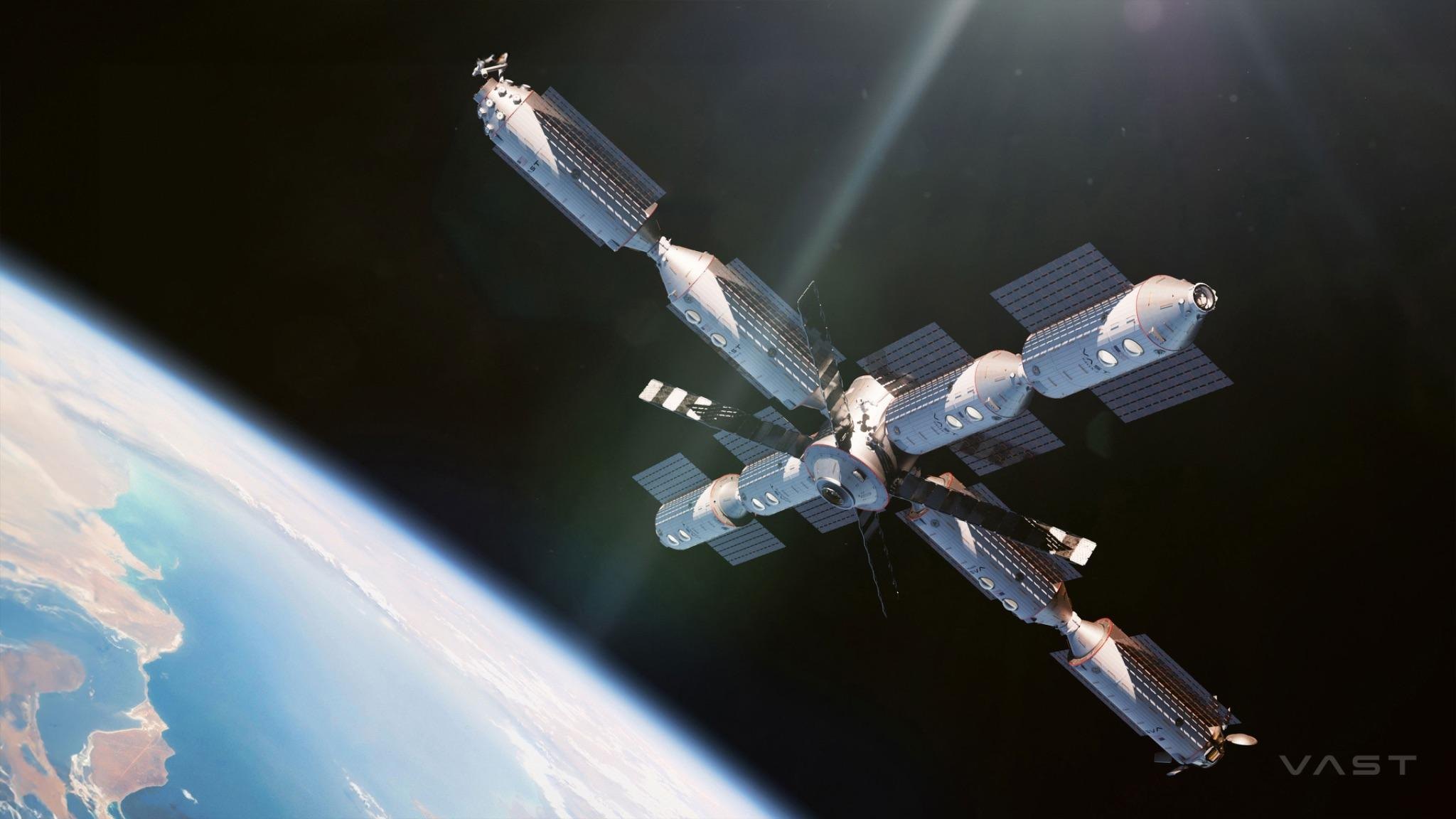
Human spaceflight is shifting from government-run outposts to commercial stations — Axiom, Starlab, Orbital Reef, and VAST — that must pay for themselves. That changes the design problem completely. As VAST CEO Max Haot puts it, a station now has to work for “the PhD researcher AND the Instagram influencer AND the factory technician” at the same time. Government astronauts, tourists, manufacturers, and researchers all share one confined volume, each with different needs, rhythms, and tolerances.

Defining the users
Four very different users now share one pressurized volume: government astronauts on structured mission timelines; tourists there for a once-in-a-lifetime experience; manufacturers running commercial payloads; and researchers who need quiet, controlled conditions. Each arrives with different rhythms, expectations, and tolerances — and the next generation of stations has to serve all of them at once.
The problem
How can a commercial station be designed to prevent user conflict and still deliver the best possible human experience? In a confined, shared habitat, small frictions compound fast.
The conflicts
The study groups the friction into two families. Sensory conflicts: thermostat wars over a temperature no one agrees on; lighting battles between someone working and someone sleeping; noise carrying through a rigid structure; and unwanted smells with nowhere to go. Spatial conflicts: circulation congestion at pinch points, and competing claims on shared resources and spaces — one galley, one window, one exercise rack, many users.

The risk of leaving them unresolved
On a government station these are irritations. On a commercial one they are business risk: a crew that sleeps badly, works poorly, and doesn't come back. Habitability stops being a nicety — it becomes what protects the wellbeing, productivity, and repeat demand the station's economics depend on.
The ideal state
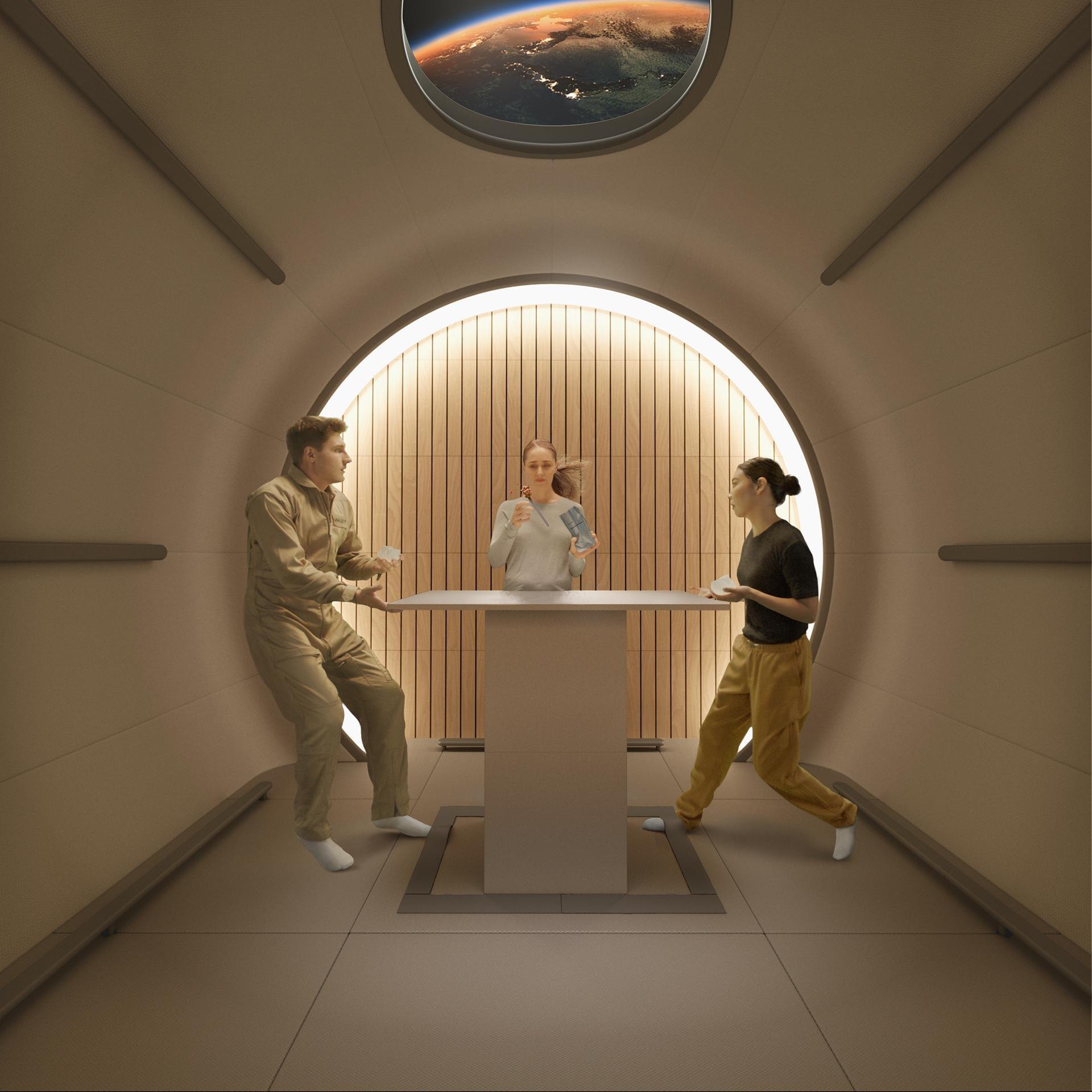
A successful multi-user station is one where four kinds of people can share a small volume for weeks without stepping on each other — where the environment quietly adapts to whoever is in a space rather than forcing a single compromise on everyone. It is a genuine testing ground for long-term human life in space.
How the study evaluates solutions
Every proposed fix is judged against five criteria: effectiveness, economic feasibility, political feasibility, technical feasibility, and flexibility and scalability. A solution that works but can't be built, funded, or scaled across a growing station doesn't count.
Proposed solutions
The study pairs a physical design move with a smart-system one for each conflict:
Noise — absorptive, curved, double-layered acoustic buffers, plus a discreet decibel-reading system that introduces AI-controlled natural soundscapes to mask disruptive sound.
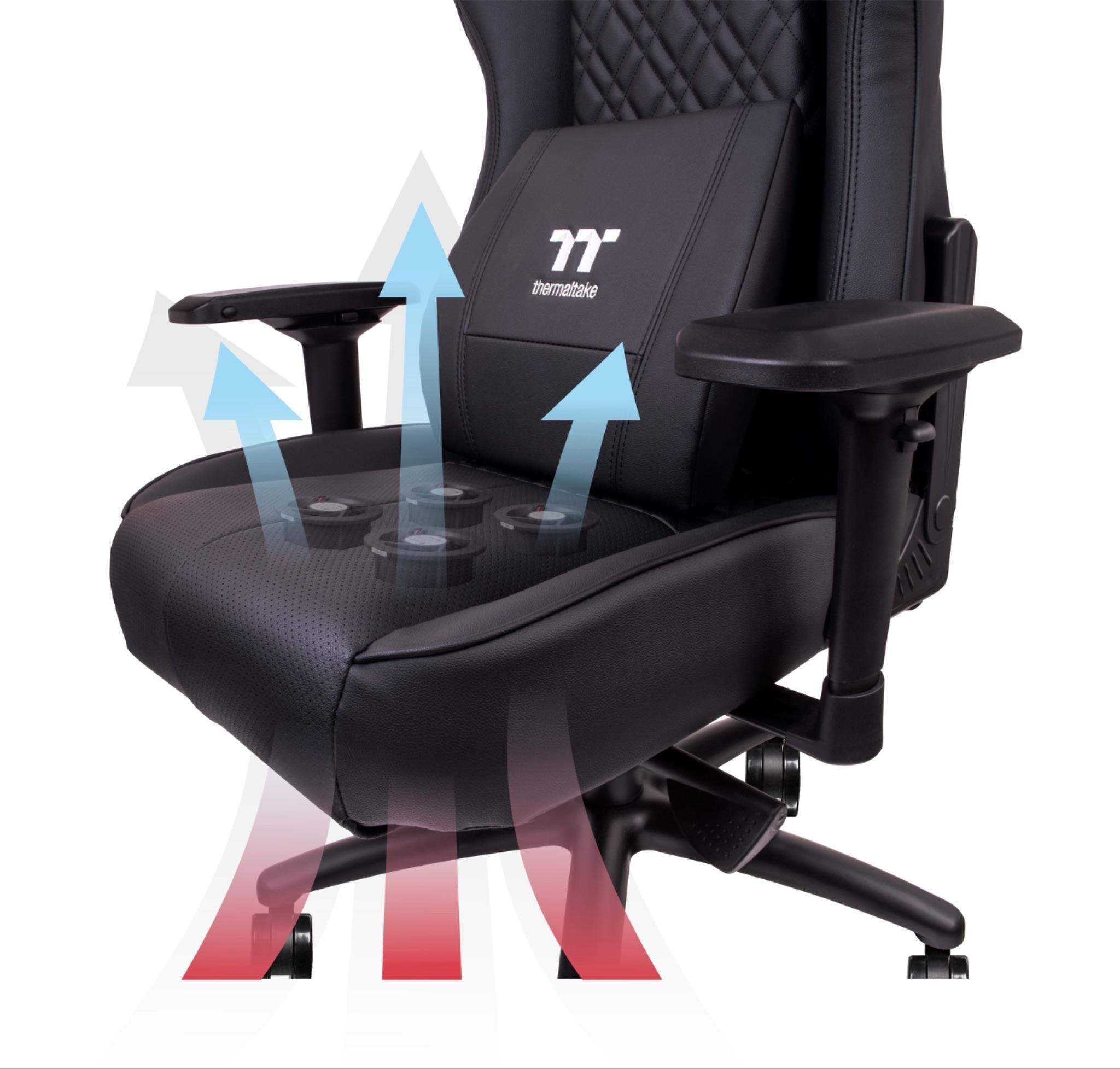
Temperature — sensor-driven auto-adjustment with negotiation algorithms, backed by personalized climate furniture (chairs, sleeping pods, exercise equipment) that conditions the individual instead of the whole module.
Light — direct task lighting, a smart lighting system, and defined sub-zones so one person's work light isn't another's insomnia.
Smell — localized capture and filtration so odors are contained at the source.
Shared resources — scheduling and allocation so the galley, window, and equipment don't become flashpoints.
Circulation — layouts that separate flow from dwell space to clear the pinch points.
Implementation: scalability & flexibility
Each solution is designed to scale across VAST's systems — from Haven-1 to Haven-2 and beyond — so habitability grows with the station rather than being retrofitted after the fact.
Impact
Getting the human layer right on a commercial LEO station isn't only about comfort in orbit. These are the building blocks for a multiplanetary future: the same conflicts, at larger scale, will decide whether people can live together on the Moon and Mars.