TESSERAE — self-assembling habitat tiles
What TESSERAE is
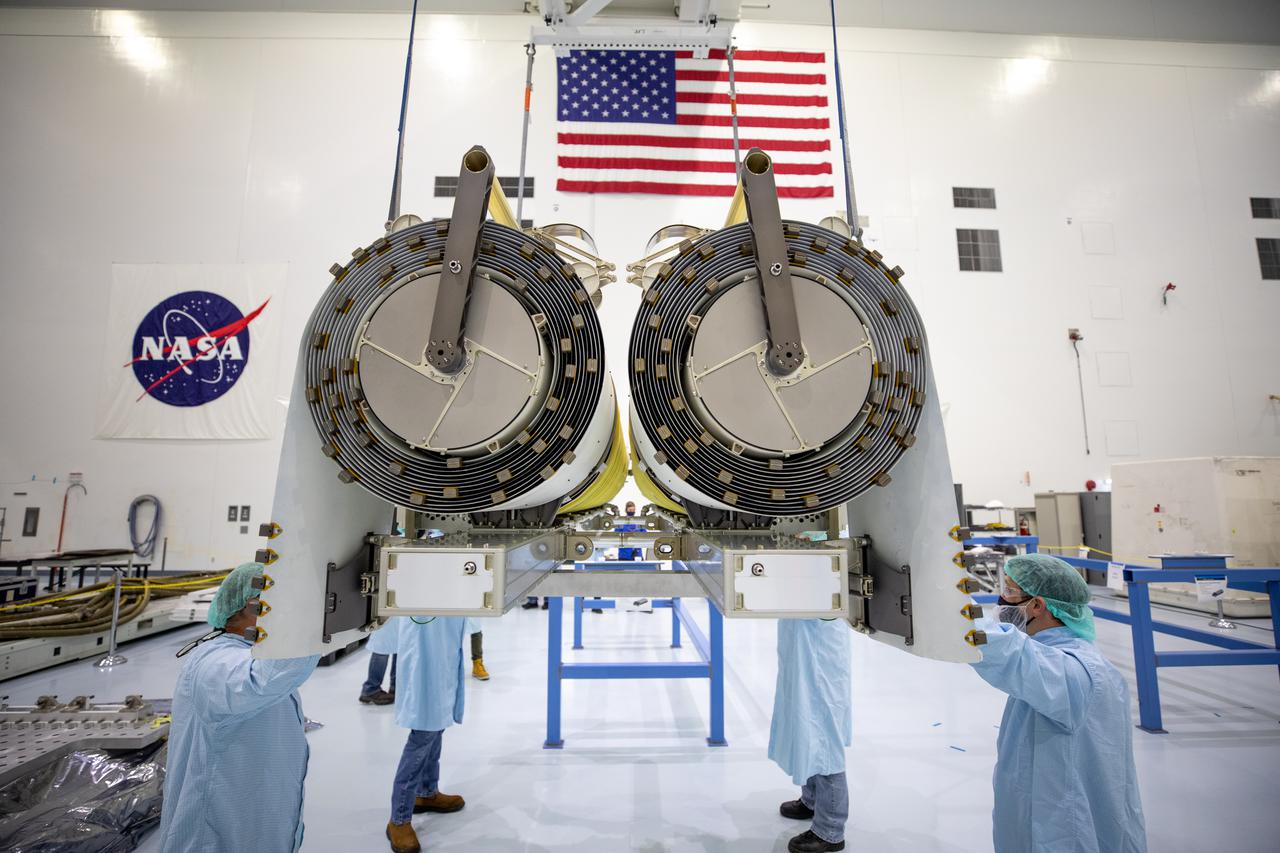
TESSERAE (Tessellated Electromagnetic Space Structures for the Exploration of Reconfigurable, Adaptive Environments) is a tessellated shell whose multifunctional tiles self-assemble autonomously in orbit — flexible, reconfigurable modules rather than one monolithic habitat.
What we designed
The brief was severe: support up to eight astronauts on three-month missions, with everything passing through a 93 cm airlock. The interior work covered a centralized habitation core with private quarters and projection surfaces; a hexagonally tessellated galley in collapsible fabric that deploys from a quarter of its final volume; an anthropometric sleeping bag using pneumatic morphing to support the body in zero-g; a meditation corridor with tactile walls and a window view; and reconfigurable life-support and storage racks adapted from JPL designs. The through-line was habitability — designing a small volume a crew would actually want to stay in for months.

.jpg)

.jpg)
What TESSERAE became
Our focus throughout was maturing the human-habitability side of the technology — making the interior something a crew could actually live in as the structure itself advanced. TESSERAE's self-assembling structures went on to be commercialized by Rendezvous Robotics, and the broader program became one of the founding projects of the Aurelia Institute, the nonprofit that spun out of the MIT Space Exploration Initiative under Ariel Ekblaw. The tiles have since flown on suborbital and ISS test missions.
Anastasia did this work as a visiting researcher at MIT Media Lab's Space Exploration Initiative. There was no formal Stellar Amenities collaboration — she was invited to bring her human-factors expertise to the interior architecture of TESSERAE, working on-site alongside Ariel Ekblaw.