
Tom: an AI assistant for astronauts
A language model that sits between a crew and mission control, so a crew member can find an answer in seconds instead of waiting on the ground.
The problem
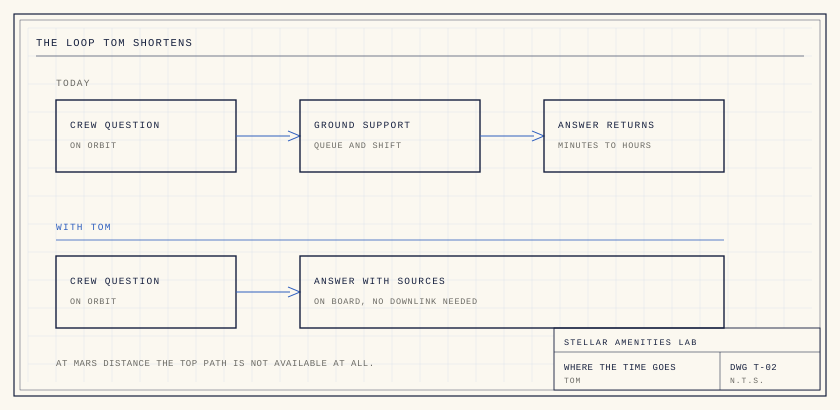
A crew in orbit works inside a system designed for a ninety minute orbit and a ground team awake on another continent. Procedures live in thousands of pages of documentation. Anything not immediately to hand goes to mission control, and the crew waits.
That wait is the most expensive thing on the station. An hour of crew time is worth roughly $130,000. Spent reading documentation or waiting for an answer, it is an hour not spent on the science the mission exists for.
The further a mission goes, the worse it gets. At Mars distance the round trip delay makes real time support impossible, and the crew has to be able to decide on its own.
What Tom does
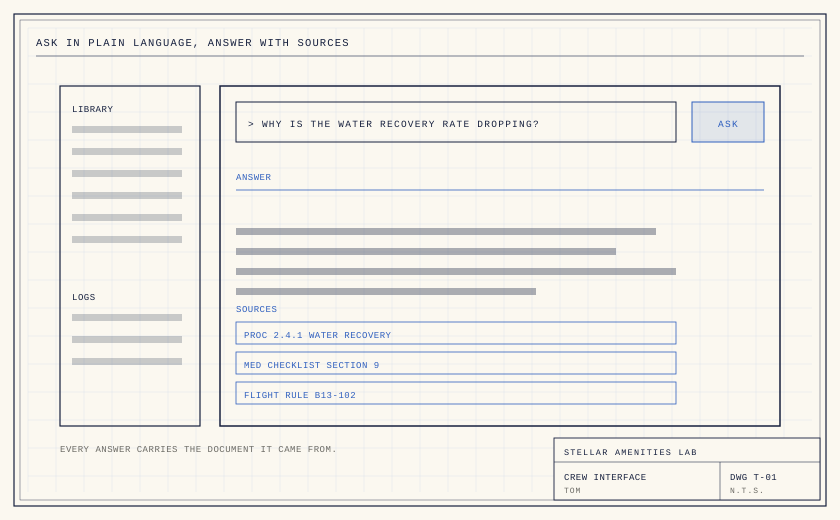
Tom is an assistant built on search and language models, trained on mission documentation, procedures and the systems aboard. A crew member asks a question in plain language and gets the answer, with the source, in seconds.
It also takes routine work off the crew: logging, drafting reports, pulling the right procedure for the task in front of them, and preparing what mission control needs before anyone has to ask for it.
The target was an hour of crew time saved per person per day, and a shift in where decisions get made, from the ground to the vehicle.
How it came about
Tom grew out of our earlier work on a behavioral health data intelligence tool for astronauts. Both start from the same observation: the crew generates a great deal of information every day, and almost none of it comes back to them in a usable form during the mission.
We validated the problem with private space companies, and by 2024 had our first customer wanting to use the product in space. The work was shared with teams at commercial station providers, including the group working on language models at Sierra Space.
Why it matters for the Lab
Tom is the software half of the same thesis as our hardware work: a crew that can measure its own state and answer its own questions is a crew that can go further from Earth.

Tom’s AI features were covered by The Washington Post.
[ ARTICLE LINK TO BE ADDED ]